
Can You Replace Just the Inside AC Unit Alone?
A failed indoor component can make a home miserable fast, especially during a Verde Valley summer. But can you replace just the inside AC unit without replacing the outdoor equipment? Sometimes, yes. In many central air systems, though, replacing only one half can create performance, warranty, and reliability problems that cost more than a properly matched replacement.
The right answer depends on what has failed, the age and condition of the outdoor unit, the refrigerant your system uses, and whether the indoor and outdoor components are approved to operate together. A licensed HVAC technician should evaluate the complete system before anyone recommends a replacement.
What People Mean by the Inside AC Unit
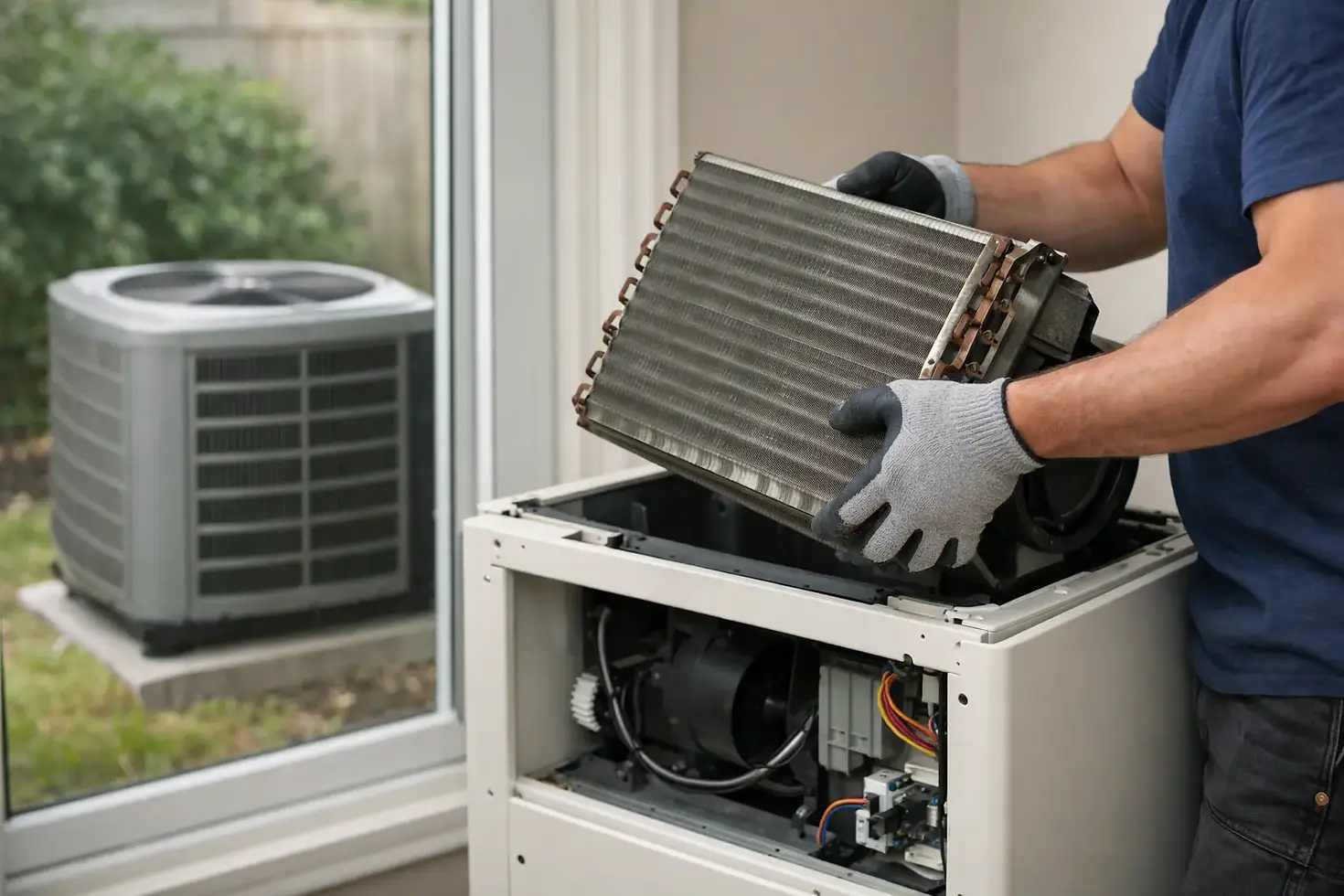
In a typical split central air-conditioning system, cooling equipment is divided between the house and the yard. The outdoor condenser contains the compressor, condenser coil, and fan. The indoor portion usually includes the evaporator coil and an air handler or furnace blower that moves cooled air through the ductwork.
That distinction matters. In many homes, the “inside AC unit” is actually an evaporator coil installed above a gas furnace. The furnace may still be in good shape even if the coil is leaking or corroded. In other homes, an air handler contains both the blower and indoor coil. A technician needs to identify exactly which component has failed before discussing whether a partial replacement makes sense.
Can You Replace Just the Inside AC Unit?
Yes, you can replace just the inside AC unit in specific situations, particularly when the outdoor condenser is newer, in good operating condition, and compatible with the replacement indoor equipment. Replacing an evaporator coil or air handler may be a sensible repair when it restores a relatively young system to proper operation.
The key word is compatible. Central air conditioners are designed and tested as matched systems. The indoor coil, outdoor condenser, refrigerant metering device, blower airflow, and controls must work together. Installing a random indoor coil because it physically fits is not the same as installing a properly matched component.
A qualified contractor will check the equipment model numbers, refrigerant type, capacity, efficiency match, electrical requirements, and manufacturer-approved combinations. This protects comfort, system life, and available warranty coverage.
When an indoor-only replacement can make sense
An indoor-only replacement is often worth considering if the outdoor unit is fairly recent and has been maintained, while the indoor coil has developed a confirmed refrigerant leak. It may also be appropriate if an air handler has a major failure but the outdoor unit remains compatible and tests well.
This approach can also help when the indoor equipment was damaged by corrosion, water issues, or a failed blower assembly that cannot be repaired reasonably. In each case, the outdoor unit should be inspected, not assumed to be fine simply because it still starts.
For a commercial property, the same principle applies. A business may be able to replace an indoor fan coil, air handler, or rooftop unit component without replacing every piece of equipment, but capacity, controls, airflow, and operating conditions still need to be verified.
When replacing both units is the better choice
If the outdoor condenser is near the end of its expected service life, replacing only the indoor equipment can be a short-term fix with a second major expense waiting nearby. A new indoor coil paired with an aging compressor may leave the homeowner with mismatched equipment and little practical benefit.
Replacing both sides is usually the better long-term decision when the system uses an older refrigerant, has had repeated repair issues, suffers from poor cooling performance, or is more than a decade old. The same is true when the outdoor unit has compressor concerns, coil damage, electrical failures, or signs of ongoing refrigerant loss.
A full matched-system replacement also gives you the opportunity to address efficiency, comfort, duct leakage, thermostat controls, and correct system sizing. Arizona heat places a heavy demand on cooling equipment. An undersized, oversized, or poorly matched system can run longer than it should, struggle with temperature control, and add unnecessary wear.
Why Matching the Indoor and Outdoor Equipment Matters
The indoor evaporator coil absorbs heat from your home. The outdoor condenser releases that heat outdoors. The compressor and refrigerant circuit depend on both coils having the correct design and capacity. When they do not match, refrigerant pressures and airflow can fall outside the range the system was built to handle.
That can lead to reduced efficiency, uneven cooling, frozen coils, high humidity, increased utility costs, and compressor damage. A system may appear to cool for a while after an improper installation, but that does not mean it is operating correctly.
Efficiency ratings also depend on matched equipment. The advertised rating for an air conditioner or heat pump is based on approved indoor and outdoor combinations. Mixing components may prevent the system from delivering its expected efficiency and could affect manufacturer warranty eligibility.
Refrigerant is another major consideration. Older systems and newer equipment may use different refrigerants and oil types. They cannot simply be connected together. When an older refrigerant-based system has a major indoor failure, a complete replacement is often the safest and most practical path.
Do Not Overlook the Ductwork and Airflow
Replacing indoor equipment is a good time to check the rest of the comfort system. The best air conditioner cannot perform well if conditioned air is escaping into an attic, return ducts are undersized, or the blower is not set up for the required airflow.
In Camp Verde, Cottonwood, Sedona, and nearby communities, attic temperatures can be punishing in summer. Leaky or poorly insulated ductwork makes an AC system work harder before cool air ever reaches the rooms where people need it. Dust buildup, return-air restrictions, and weak airflow can also contribute to coil freezing and preventable breakdowns.
A professional assessment should include duct condition, static pressure, drainage, electrical connections, thermostat operation, filter fit, and the condition of the outdoor unit. This is how a replacement decision becomes a comfort solution instead of a parts swap.
What a Professional Evaluation Should Answer
Before approving an indoor-only replacement, ask for clear answers about the condition of the entire system. You should know what failed, why it failed, whether the outdoor unit is still dependable, and whether the proposed equipment is an approved match.
A thorough technician should also explain whether the repair will preserve warranty coverage, what efficiency you can realistically expect, and whether there are repair risks due to age or refrigerant type. If a contractor recommends replacing both units, ask what evidence supports that recommendation. A good answer will be based on inspection findings, not pressure.
It is also reasonable to compare the cost of an indoor-only repair with the cost of a matched replacement system. A partial repair may have the lower upfront cost, while a complete system may provide stronger reliability, better efficiency, and more predictable long-term value. Financing can make that larger decision more manageable for homeowners and business owners who need dependable cooling now.
A Better Decision Than Replacing the Cheapest Part
There is no one-size-fits-all answer. If your outdoor equipment is newer, compatible, and in solid condition, replacing the indoor coil or air handler alone may be the right repair. If both components are aging, use outdated refrigerant, or have a history of problems, replacing the complete matched system is often the more responsible investment.
TNT Heating and Cooling can inspect the equipment, explain the options in plain language, and help you choose a solution that fits your home, business, comfort needs, and budget. The goal is not simply to get the AC running for the day. It is to give you cooling you can count on when the next hot afternoon arrives.


Comments