

Central AC Comparison for Verde Valley Homes
A central AC comparison is not just a search for the lowest equipment price. In the Verde Valley, your system has to handle long stretches of intense heat, keep temperatures even from room to room, and do it without driving up utility costs or creating constant repair concerns. The right choice depends on your home, ductwork, comfort expectations, and how long you plan to stay in the property.
A good contractor should help you compare complete systems, not simply point to a brand name or a high efficiency rating. Equipment matters, but proper sizing, installation quality, airflow, and service support matter just as much once summer arrives.
Central AC Comparison: Start With the System Type
Most homes use either a split central air conditioner or a packaged system. A split system has an outdoor condensing unit and an indoor air handler or furnace coil. It is the most common setup because it can work with existing indoor equipment and usually offers the broadest range of efficiency and comfort options.
A packaged unit places the cooling components in one cabinet, typically outdoors or on a roof. These systems can be a practical fit for homes with limited indoor mechanical space and for certain commercial buildings. Because service access, duct connections, and installation conditions vary, the best choice is often based on the property itself rather than a general preference.
For many homeowners, the bigger decision is whether to install a conventional air conditioner or a heat pump. A central air conditioner cools the home and works alongside a separate heating system. A heat pump cools in summer and provides heating in winter by moving heat rather than creating it through combustion.
In much of Arizona, a heat pump can be an efficient all-electric option because winter temperatures are generally moderate. However, the right fit depends on your current heating equipment, energy costs, insulation, and whether your home experiences colder conditions at elevation. A home in Camp Verde may have different heating needs than a property closer to Flagstaff.
Compare Comfort Levels, Not Just Cooling Capacity
Central systems are often described as single-stage, two-stage, or variable-capacity units. These terms refer to how the compressor operates.
A single-stage air conditioner runs at full output whenever it is on. It is usually the most budget-friendly option, and it can be a sensible choice for a smaller home, rental property, or homeowner focused on the initial installation cost. The trade-off is that it may cycle on and off more frequently, particularly during milder weather.
A two-stage system can run at a lower level for much of the day and use full capacity during the hottest periods. Longer, lower-speed run times can improve temperature consistency and help with humidity control. While humidity is not usually the biggest concern in the Verde Valley, better airflow and steadier operation can still make rooms feel more comfortable.
Variable-capacity equipment makes smaller adjustments to match the home's cooling demand. It often provides the most even indoor temperatures, quieter operation, and the highest efficiency potential. It also costs more upfront and should be installed by a technician who understands the controls, communicating equipment, and airflow requirements.
Higher-end equipment is not automatically the best value. If a home has poorly sealed ducts, weak attic insulation, or an incorrectly sized return system, those issues can limit the benefits of a variable-capacity unit. Sometimes, duct sealing and a properly matched two-stage system deliver better real-world results than putting the entire budget into premium equipment.
Efficiency Ratings Matter, With a Few Exceptions
New central air conditioners use SEER2 ratings to show seasonal cooling efficiency. In simple terms, a higher SEER2 rating means the system uses less electricity over a typical cooling season. EER2 is another helpful rating because it measures efficiency under a specific high-temperature condition, which can be relevant in a hot climate.
A higher rating can reduce operating costs, but the savings should be weighed against the added purchase price. If you plan to remain in your home for many years and use substantial cooling each summer, investing in greater efficiency may make sense. If you expect to move soon or have a vacation property with limited use, a moderate-efficiency system may be the more practical investment.
When comparing proposals, ask whether the stated efficiency is based on a complete matched system. The outdoor unit, indoor coil, air handler or furnace, and thermostat controls can affect the final certified rating. Replacing only an outdoor unit may seem less expensive, but it can create compatibility problems or leave efficiency on the table if the indoor components are old.
Proper Sizing Protects Comfort and Equipment Life
A larger air conditioner is not a stronger solution. An oversized system can cool the thermostat area quickly, then shut down before air has circulated evenly through the home. Short cycling can increase wear on components and leave distant rooms uncomfortable. An undersized system may run continuously on the hottest days without reaching the desired indoor temperature.
The correct size should be based on a load calculation that considers square footage, ceiling height, window direction, insulation, ductwork, occupancy, and heat-producing appliances. Home additions, window upgrades, roof work, and insulation changes can all affect the size needed today compared with the size of the old system.
Be cautious with a replacement recommendation based only on the tonnage of your existing unit. The old system may have been oversized from the beginning, or changes to the house may have altered the cooling load. A careful evaluation takes more time, but it helps prevent an expensive comfort problem.
Ductwork Can Change the Result of Any Central AC Comparison
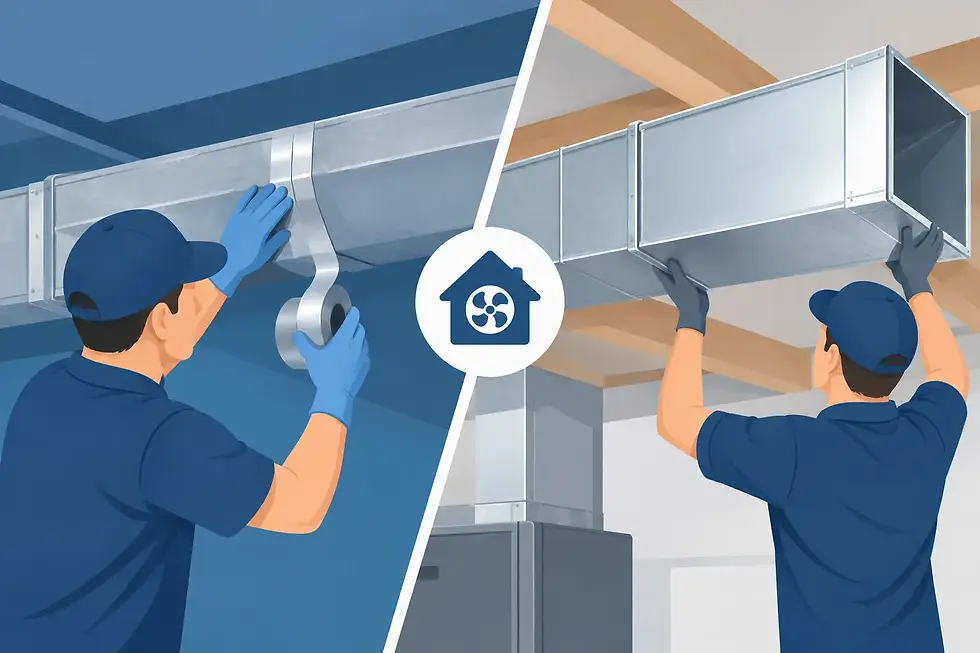
Your central AC system can only perform as well as the air distribution system allows. Leaky ducts in an attic, disconnected sections, crushed flex duct, inadequate returns, and poor room balancing can waste cooled air before it reaches the living space.
Signs of duct-related trouble include rooms that are consistently hotter than others, dusty airflow, unusually high bills, weak air from supply vents, or a system that runs for long periods without delivering consistent comfort. Duct sealing, repair, or redesign may be needed alongside equipment replacement.
This is particularly important when moving to a higher-efficiency unit. A new system may use less energy, but duct losses can reduce the savings and put unnecessary strain on the equipment. Addressing airflow at installation helps protect the investment from day one.
Installation Quality Often Matters More Than the Badge
Major HVAC brands offer dependable equipment at several price points. Brand features, warranty terms, available efficiency levels, and local parts availability are all worth discussing. Still, a well-installed midrange system will generally outperform a premium system that was rushed, poorly sized, or connected to failing ductwork.
A complete proposal should explain what is included beyond the outdoor unit. That may include the indoor coil, refrigerant line evaluation, electrical work, drain protection, thermostat, pad or mounting equipment, startup testing, and disposal of old equipment. It should also identify whether duct repairs or code-related updates are necessary.
Ask how the contractor verifies refrigerant charge and airflow after installation. Those details affect capacity, efficiency, and compressor life. You should also ask about maintenance needs, warranty registration, and who will service the system if a concern develops later.
Consider Repair Versus Replacement Honestly
If your current central air conditioner is relatively new and the repair is straightforward, repair may be the sensible route. Replacement becomes more compelling when repairs are frequent, the system uses obsolete refrigerant, the compressor has failed, energy bills are climbing, or the equipment is near the end of its expected service life.
There is no one repair-cost percentage that answers every situation. A costly repair on a 15-year-old system may be difficult to justify, while the same repair on a newer, otherwise reliable unit may be reasonable. Your budget, current comfort problems, and plans for the home should guide the decision.
For homeowners who need a replacement but prefer not to absorb the full cost at once, financing can make a properly sized, professionally installed system more manageable. The goal is not to push the most expensive option. It is to select a system that solves the comfort problem without creating a larger financial burden.
Before approving a new installation, ask for an explanation you can understand: why that system size was selected, what efficiency level fits your use, whether the ducts need attention, and what work is included. TNT Heating and Cooling can evaluate those details and help you choose an option that makes sense for your home or business. A clear answer now is one of the best ways to enjoy reliable cooling when the next Arizona heat wave arrives.


Comments