

Duct Sealing in Mobile Homes That Cuts Waste
A mobile home can have a newer air conditioner and still feel uncomfortable if conditioned air is escaping beneath the floor. Duct sealing in mobile homes addresses one of the most common hidden causes of high utility bills, uneven temperatures, dusty indoor air, and rooms that never seem to cool properly during an Arizona summer.
Unlike ductwork inside an attic or basement, much of a manufactured home's duct system is typically located in the enclosed area below the floor. That location protects it from view, but it also means small tears, loose joints, damaged insulation, and disconnected sections can go unnoticed for years. A careful inspection can reveal whether the issue is a simple repair, a larger duct restoration project, or part of a broader HVAC problem.
Why Mobile Home Ducts Need Special Attention
Many mobile homes use a main supply duct running through the floor cavity, with branch ducts delivering air to individual rooms. Multi-section homes may also have a crossover duct that carries heated or cooled air from one section of the home to the other. These components are often wrapped in insulation and protected by a moisture barrier, sometimes called the belly board.
Over time, road vibration from the original move, settling, animal activity, moisture, age, and prior repair work can affect that system. Tape can dry out and peel away. Flexible duct can sag or tear. A connection may loosen at the air handler, floor boot, or crossover. When air leaks into the underbelly instead of reaching the living space, the heating and cooling equipment must run longer to make up the difference.
In Camp Verde and across the Verde Valley, that wasted cooling is especially noticeable during long stretches of hot weather. Air escaping below the home does not just raise energy use. It can make the far end of the home feel warmer, put more strain on the system, and leave homeowners turning down the thermostat without getting the comfort they expect.
Signs Your Mobile Home May Have Duct Leaks
A duct problem is not always obvious from inside the home. Still, a few patterns are worth taking seriously. If one room is consistently warmer or cooler than the rest, the duct serving that room may be restricted, disconnected, or leaking. Weak airflow from one or more floor registers can point to the same issue.
Higher-than-normal power bills are another common clue, especially when your usage has not changed and the equipment appears to be operating normally. You may also notice more dust, musty odors when the system starts, or a system that runs for long periods without bringing the home to the set temperature.
Cold floors in winter can be a sign as well. Heated air leaking below the floor can warm the underbelly rather than the living area. In some cases, a damaged belly board allows outside air, dust, and moisture to enter around the ductwork, adding to comfort and air-quality concerns.
These symptoms do not automatically mean the ducts are the only problem. A dirty filter, undersized system, aging heat pump, refrigerant issue, poor insulation, or thermostat problem can create similar complaints. That is why an inspection matters before deciding where to spend money.
What Professional Duct Sealing in Mobile Homes Involves
Proper duct sealing is more than applying tape to anything visible near a floor register. A qualified HVAC technician starts by looking at the system as a whole: airflow, duct routing, accessible connections, insulation condition, the crossover duct if present, and the condition of the underbelly.
Finding the actual leak points
The goal is to locate separations and damaged areas without creating unnecessary disruption. Common trouble spots include the connection between the HVAC unit and main duct, joints in the trunk line, branch connections, floor boots, and the crossover duct on double-wide homes. A technician may also find crushed or poorly supported flexible duct, which restricts airflow even when it is not leaking.
Access can be more involved than with a site-built home. The belly material may need to be opened carefully, then repaired after the ductwork is completed. If there is standing water, rodent damage, deteriorated insulation, or extensive moisture damage below the home, those conditions should be addressed as part of the repair plan rather than covered up.
Sealing joints with the right materials
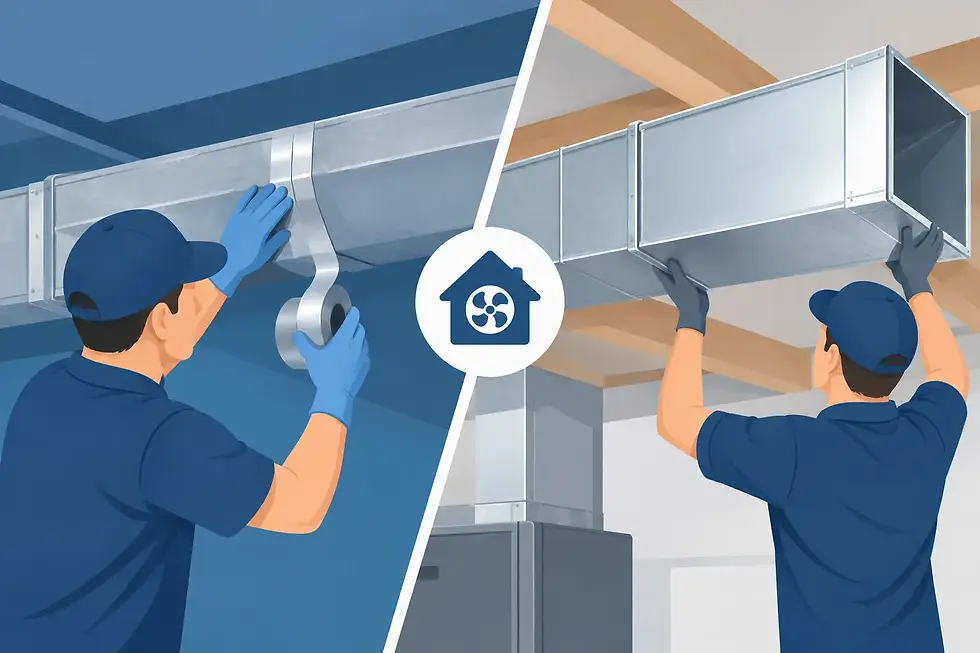
HVAC-rated mastic and approved foil tape are commonly used to seal duct joints and connections. Ordinary cloth-backed duct tape is not a lasting repair material. Despite its name, it can loosen when exposed to heat, dust, and changing conditions over time.
The best method depends on the duct material and damage. A loose connection may be reattached and sealed. A small tear in flexible duct may be repairable if the surrounding material is still sound. A crushed, brittle, water-damaged, or heavily contaminated section is often better replaced. Trying to patch a duct that has reached the end of its service life may cost less today but lead to another service call soon.
Restoring insulation and the underbelly
Sealing the air path is only one part of a complete repair. Duct insulation helps keep cooled or heated air at the right temperature before it reaches the room. If insulation is wet, missing, or compressed, the system loses efficiency even after leaks are sealed.
The protective underbelly should also be closed and secured once repairs are complete. This barrier helps limit wind, moisture, pests, and debris around the duct system. Skipping that final step can expose new duct repairs to the same conditions that caused the original problem.
When Sealing Is Enough and When Replacement Makes More Sense
Not every duct issue requires a full replacement. If the duct layout is in good condition and the leaks are limited to a few joints or a crossover connection, targeted sealing can make a meaningful difference in comfort and system performance.
Replacement becomes more reasonable when flexible duct is badly torn, flattened, brittle, repeatedly patched, or soaked from a long-term moisture issue. It may also be the better choice if a prior installation used poorly sized ductwork or if the system has never delivered adequate airflow to key rooms.
This is where a clear, local assessment is valuable. Homeowners should know whether a repair is expected to last, what portions of the duct system are affected, and whether a more extensive repair would prevent repeat problems. The lowest upfront option is not always the better value, but replacing ductwork that is still structurally sound is not automatically necessary either.
Do Not Ignore Safety and Air Quality Concerns
Leaky ducts can affect more than comfort. Return-side leaks may pull dusty air from the underbelly or surrounding cavities into the HVAC system. That can increase dust buildup, dirty the blower and coil, and reduce indoor air quality.
Homes with gas furnaces or other combustion appliances deserve additional care. Improper airflow and pressure conditions can contribute to safety concerns, so duct repairs should be evaluated by a trained HVAC professional rather than treated as a weekend patch job. Carbon monoxide detectors should be installed and maintained according to manufacturer guidance, regardless of the condition of the ductwork.
Duct cleaning and duct sealing also serve different purposes. Cleaning may be appropriate when there is confirmed debris buildup or contamination. Sealing stops conditioned air from escaping and helps prevent unfiltered air from being pulled into the system. One service does not automatically replace the other.
How to Protect Your Duct Repairs
After repairs, use a clean, properly sized filter and replace it on schedule. Keep floor registers open and clear of rugs, furniture, and storage. If you notice a sudden drop in airflow, an unusual odor, or damage to the skirting or underbelly after severe weather or pest activity, have it checked before the problem grows.
Annual HVAC maintenance is also a practical time to discuss airflow concerns. A technician can check whether the equipment is operating as intended and help determine whether comfort issues are tied to the unit, the duct system, or both.
For homeowners who are tired of paying to cool the space beneath their home, a professional duct inspection can provide a straightforward answer. TNT Heating and Cooling can evaluate the condition of your mobile home ductwork and help you choose a repair approach that supports reliable comfort without pushing work you do not need.


Comments