
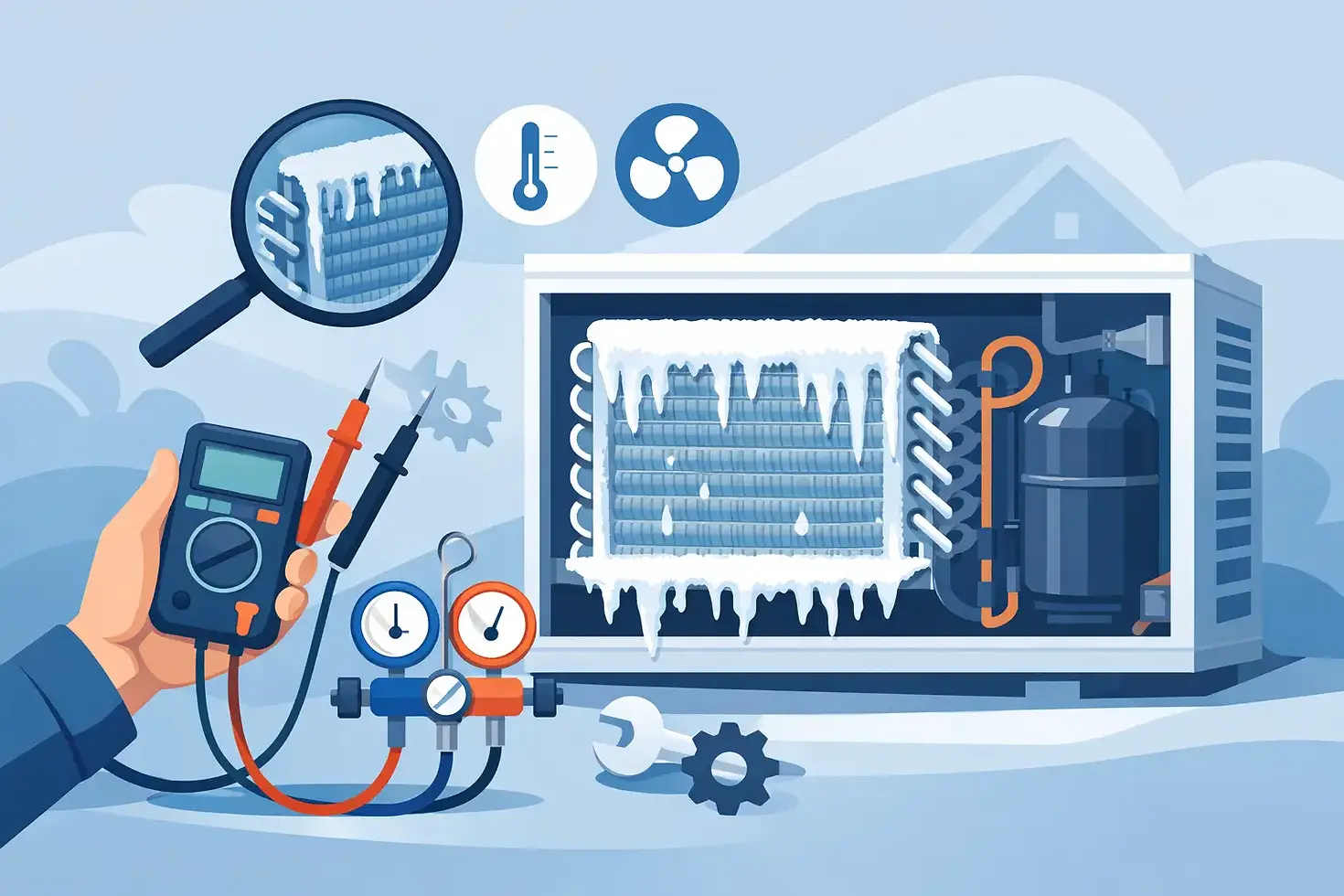
How to Troubleshoot a Frozen Evaporator Coil
- tntverdevalley
- 12 minutes ago
- 5 min read
A frozen indoor evaporator coil can turn a hot Verde Valley afternoon into a frustrating problem fast. You may notice weak airflow, warmer air from the vents, ice on the refrigerant line, or water around the indoor unit after the system shuts down. If you are searching for how to troubleshoot frozen evaporator problems, start by protecting the equipment: turn off cooling before the ice creates a larger repair.
What a Frozen Evaporator Coil Means
Your evaporator coil is the part of the indoor HVAC system that absorbs heat from your home or business. Refrigerant moves through the coil, and the blower pushes warm indoor air across it. Under normal conditions, the coil gets cold but stays above freezing.
Ice forms when the coil becomes too cold or does not receive enough warm airflow. The ice then blocks even more airflow, creating a cycle that reduces cooling capacity and can put extra strain on the compressor. Running an air conditioner with a frozen coil is not a way to “push through” the problem. It can turn a relatively straightforward airflow issue into a more expensive system repair.
A frozen coil is a symptom, not a diagnosis. The most common causes are restricted airflow, a dirty coil, a blower problem, low refrigerant, or a drainage issue that has been overlooked long enough to affect operation.
How to Troubleshoot a Frozen Evaporator Safely
Before opening panels or checking the system, set the thermostat from Cool to Off. If your thermostat allows it, set the fan to On rather than Auto. The circulating indoor air can help thaw the coil without running the compressor.
Do not chip ice off the coil, scrape it with a tool, or pour hot water into the cabinet. Evaporator fins bend easily, and forcing the ice off can damage the coil or electrical components. Depending on how heavily it is frozen, complete thawing may take several hours. Place towels around the air handler if needed, since melting ice can produce a considerable amount of water.
Once the unit has thawed, you can check several homeowner-accessible items.
Check the air filter first
A clogged filter is one of the most common reasons an evaporator freezes. When the filter is loaded with dust, pet hair, or construction debris, it limits the amount of air moving across the coil. Less warm air reaches the coil, its surface temperature drops, and moisture freezes.
Remove the filter and inspect it in good light. If it is visibly dirty, replace it with the correct size and airflow rating for your system. A very high-restriction filter can create airflow trouble in some older systems, even when it is new. Use the filter type recommended for your equipment, and make sure it is installed in the direction of the airflow arrow.
Look for blocked returns and supply vents
Your system needs an open path for air to travel from the rooms, through the return grilles, across the equipment, and back out through the supply vents. Check whether furniture, rugs, boxes, or curtains are covering return grilles. Also make sure supply registers are open, particularly in rooms that are normally closed off.
Closing a vent or two usually will not freeze a healthy system. Closing many vents, however, can reduce airflow enough to contribute to icing. The same is true when return ducts are blocked or damaged. In homes with flexible ductwork, a crushed or disconnected duct can reduce air delivery without being obvious from inside the room.
Check for weak or unusual blower operation
With the thermostat fan set to On, listen for the indoor blower. You should hear steady airflow at the registers. If airflow is weak throughout the building, intermittent, or accompanied by squealing, rattling, or burning odors, turn the system off and arrange for service.
The issue may involve a failing blower motor, a capacitor, a control board, a dirty blower wheel, or a duct restriction. These components are not good candidates for trial-and-error repair. Electrical hazards and equipment damage are real concerns inside an air handler or furnace cabinet.
Inspect for signs of a dirty indoor coil
A dirty filter often means the evaporator coil may also be dirty, especially if maintenance has been delayed. The coil is typically located behind an access panel near the blower. You may see dust buildup on the coil surface or notice that the system has gradually lost cooling performance over time.
Do not force access to a sealed cabinet or apply household cleaners to the coil. Coil cleaning requires the right cleaner, proper runoff control, and care around fragile fins and wiring. A technician can clean the coil while checking the rest of the airflow system, including the blower assembly and drain pan.
When Low Refrigerant Is the Likely Cause
If the filter is clean, vents are open, airflow seems normal, and the coil freezes again after thawing, low refrigerant becomes more likely. Refrigerant does not get used up like fuel. When a system is low, it usually has a leak.
Common signs can include ice returning quickly, hissing near the refrigerant lines, longer cooling cycles, reduced comfort, and higher utility use. In some cases, the larger insulated copper line outside or near the indoor unit will frost over. That does not confirm a refrigerant leak by itself, but it is a reason to schedule a professional inspection.
Adding refrigerant without finding the leak is not a lasting repair. A qualified HVAC technician should measure operating pressures, inspect for leaks, confirm proper airflow, and verify that the system is charged to manufacturer specifications. Refrigerant handling requires specialized equipment and certification, so this is not a do-it-yourself step.
Do Not Overlook Condensate Drain Problems
Air conditioning naturally removes moisture from indoor air. That water drains through a condensate line. In Arizona’s dry climate, people sometimes assume drain maintenance is not necessary, but dust, algae, and debris can still clog the line or trap.
A backed-up drain does not always cause a coil to freeze directly, but it can trigger a float switch, create water damage, or point to a maintenance issue around the indoor unit. After the ice melts, check for standing water around the air handler, a full drain pan, or water stains near the equipment. If you see water inside electrical areas or the ceiling below an attic unit, leave the system off and call for service promptly.
Why the Problem May Return After You Restart the System
Replacing a dirty filter and thawing the coil may solve the issue, but do not assume it has been fixed until the system runs normally. Restart cooling only after all ice has melted. Set the thermostat a few degrees below the indoor temperature and monitor the system for the next hour or two.
Pay attention to airflow, vent temperature, and whether frost begins forming on the refrigerant line again. If airflow remains weak or ice returns, shut cooling off. Repeated freeze-ups can flood the drain system, damage the compressor, and leave your home or business without dependable cooling when temperatures are high.
It also helps to consider what changed before the freeze-up. A recent filter change, remodeling dust, a new piece of furniture blocking a return, a long period without maintenance, or a sudden decline in cooling can narrow down the cause. That information helps a technician diagnose the issue more efficiently.
When to Call an HVAC Professional
Call for service if the coil freezes again after you replace the filter and confirm open airflow paths. You should also call if you see damaged ductwork, hear blower problems, find water around the equipment, or suspect a refrigerant issue.
For homeowners and business owners in Camp Verde, Cottonwood, and the surrounding Verde Valley, fast attention matters during cooling season. TNT Heating and Cooling can inspect frozen-coil problems across major equipment brands, identify whether the cause is airflow, drainage, electrical operation, or refrigerant loss, and recommend a practical repair.
A frozen coil is your HVAC system asking for attention before a small restriction or leak becomes a bigger interruption to your comfort. Turn the cooling off, allow the equipment to thaw, handle the simple airflow checks you can safely make, and let a qualified technician take over when the cause is not clear.


Comments