
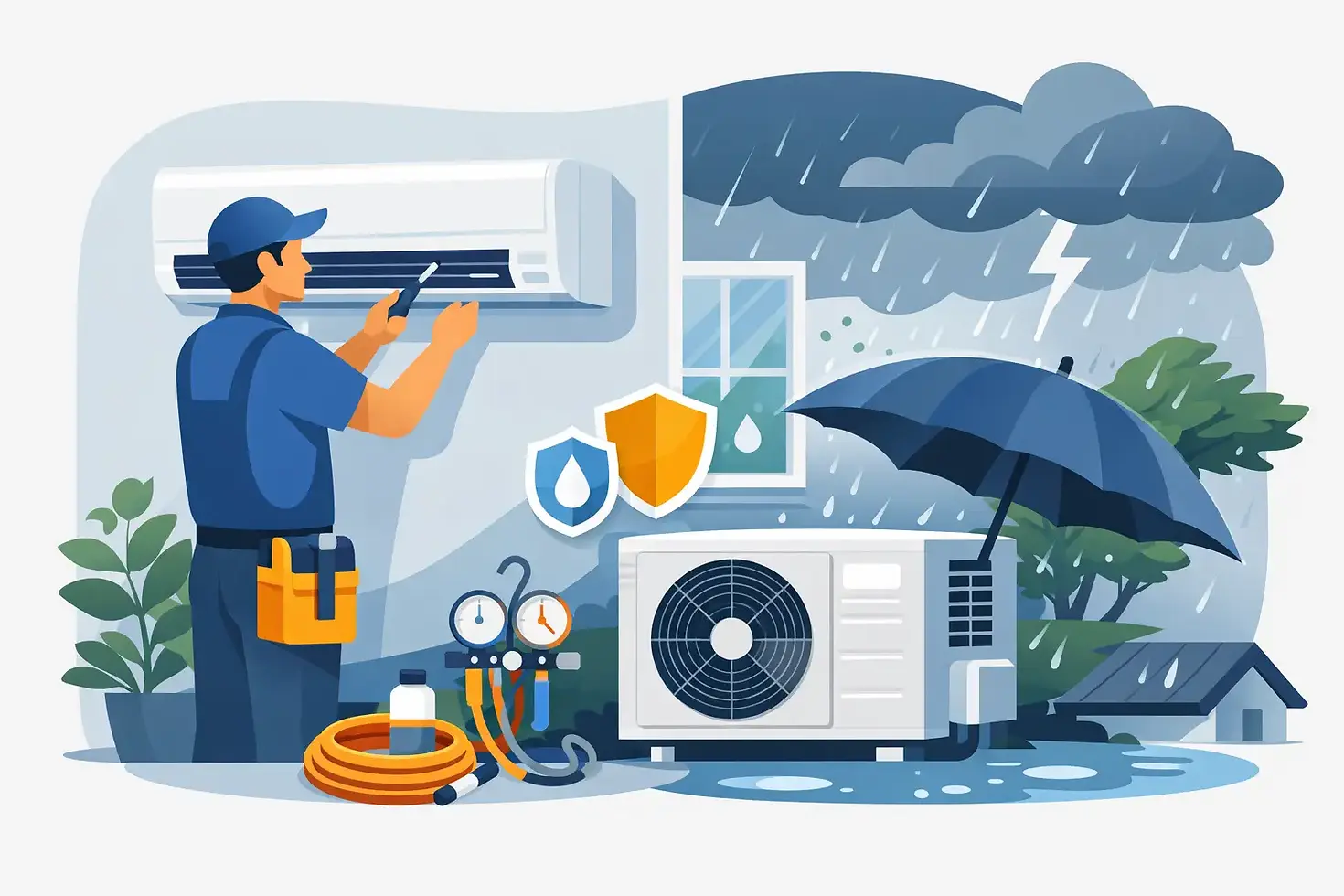
How to Prepare AC for Monsoon Season Safely
Monsoon weather can turn a hot, dry afternoon into blowing dust, high winds, heavy rain, and lightning in a matter of minutes. Knowing how to prepare AC for monsoon conditions helps protect the equipment that keeps your home or business comfortable when the weather settles. A few practical checks before the season starts can reduce the chance of a shutdown, water issue, or avoidable repair call.
For Verde Valley property owners, the biggest concern is not rain alone. Wind-driven debris, dust buildup, power fluctuations, and drainage problems can all affect air-conditioning performance. Some preparation is safe for a homeowner to handle, while electrical and mechanical concerns are best left to a licensed HVAC professional.
Start With the Outdoor AC Unit
Your outdoor condenser is built to operate outside, including in normal rain. It does not need a tarp, plastic cover, or other wrap during monsoon season. Covering a unit that is running can trap heat, restrict airflow, and contribute to compressor damage.
Instead, give the area around the unit room to breathe. Remove loose branches, weeds, leaves, patio items, and stored materials from around the condenser. A clear space of about two feet on all sides is a good target. This lets the unit pull in air properly and makes it less likely that windblown debris will lodge in the coil or fan compartment.
Look upward as well. Overhanging limbs can break during a strong storm and damage the cabinet, fan guard, or refrigerant lines. If a tree needs substantial trimming near electrical equipment, hire a qualified tree service rather than trying to manage heavy branches yourself.
Check the Pad and Surrounding Grade
The condenser should sit level on a stable pad. Soil can wash away or shift after repeated storms, leaving the unit tilted. A severely unlevel condenser may place unnecessary strain on components and can affect oil circulation in the compressor.
Before monsoon rains arrive, check for erosion, standing water, or a low spot around the pad. The ground should direct water away from the equipment and the building foundation. Do not raise, level, or relocate the unit yourself. Refrigerant lines and electrical connections can be damaged if the system is moved incorrectly.
Clean Dust Before Rain Turns It Into Grime
Arizona dust is hard on air conditioners. It settles on outdoor coils, gets pulled into filters, and can combine with rain to form a stubborn layer that reduces heat transfer. When the condenser coil cannot release heat efficiently, the system runs longer and may struggle to cool during the hottest part of the day.
Homeowners can gently rinse obvious loose dust from the exterior coil fins with a garden hose. Turn off power to the unit first, use a light spray rather than a pressure nozzle, and spray from the outside without forcing water deep into electrical areas. Never use a pressure washer. The thin aluminum fins bend easily, and bent fins reduce airflow.
If the coil looks matted with dirt, cottonwood fluff, grease, or mineral residue, schedule professional maintenance. A technician can clean the coil correctly, inspect electrical components, verify refrigerant performance, and make sure the fan and capacitor are in good condition. This is especially worthwhile for equipment that has worked through a long stretch of summer heat before monsoon moisture arrives.
Replace or Inspect the Air Filter
A clean indoor air filter is one of the simplest ways to protect your AC. During dusty conditions, filters load up faster than many homeowners expect. A restricted filter limits airflow across the indoor coil, which can cause weak cooling, longer run times, frozen coils, and unnecessary wear on the blower motor.
Check the filter monthly during the cooling season and more often if there is construction nearby, pets in the home, or frequent dust storms. Use the filter size and rating recommended for your system. A very high-density filter can be useful in some homes, but it may also restrict airflow if the system was not designed for it. When in doubt, ask an HVAC technician which filter provides the right balance of filtration and airflow.
For businesses, assign filter checks to a specific staff member or include them in the property maintenance calendar. A neglected filter can create comfort complaints in offices, retail spaces, and rental properties long before it causes a complete failure.
Make Sure Condensate Has Somewhere to Go
Your air conditioner removes moisture from indoor air, and that moisture exits through a condensate drain line. While Arizona is known for dry heat, monsoon humidity increases the amount of water your system may produce. A partially blocked drain can overflow at the indoor unit, damage ceilings or walls, or trigger a safety switch that shuts the AC down.
Look for signs of a drainage problem near the indoor air handler or furnace: water stains, moisture around the unit, a musty smell, or an AC that stops running without an obvious reason. If you see any of these signs, turn the system off and arrange service. Continuing to operate it can make water damage worse.
A technician can clear the drain, inspect the trap and drain pan, confirm proper slope, and test any float switch. This is a small maintenance item that can prevent a much larger cleanup.
Protect the System From Storm Debris and Power Issues
Monsoon storms bring more than rain. Dust storms can push fine debris into outdoor equipment, and high winds can send loose objects across a yard. Before a storm, secure lightweight furniture, toys, grill covers, and yard decorations that could strike the condenser.
After a significant storm, do a visual check from a safe distance. Look for branches on the unit, crushed fan guards, debris packed into the coil, pooled water, or damaged electrical conduit. Do not remove panels or reach through the fan guard. If anything appears bent, disconnected, or damaged, leave the system off until it can be inspected.
Lightning and utility interruptions can also affect HVAC electronics. A whole-home surge protector installed by a qualified electrical professional can help protect sensitive equipment, though no device can guarantee protection from a direct lightning strike. If the power goes out, turn the thermostat off or set it higher. When power returns, wait several minutes before restarting the AC to give pressures time to equalize.
Know What Not to Do
Good intentions can create expensive problems during monsoon season. Avoid these common mistakes:
Do not cover a running outdoor unit with plastic, plywood, or a fitted cover.
Do not pressure wash condenser coils or straighten fins with improvised tools.
Do not open electrical panels, disconnect boxes, or access capacitors after a storm.
Do not keep resetting a breaker that trips repeatedly.
Do not run the AC if you suspect flooding, electrical damage, or a fallen branch has affected the unit.
A breaker that trips, a humming outdoor unit that will not start, burning odors, or unusual rattling after a storm all call for professional diagnosis. HVAC equipment combines high voltage, moving parts, and pressurized refrigerant. The safest repair is the one made after the underlying cause has been identified.
Schedule Maintenance Before the Weather Gets Unpredictable
The best time for preventative AC maintenance is before a problem becomes urgent. During a professional visit, the technician can check the outdoor coil, electrical connections, capacitor, contactor, blower performance, condensate drainage, refrigerant operation, and overall cooling output. These checks are not about selling a repair that is not needed. They are about finding worn parts, airflow restrictions, and drainage issues early enough to address them on your schedule.
Maintenance is particularly useful for older systems, units that have needed repairs recently, homes with uneven cooling, and commercial equipment that runs long hours. It can also clarify whether a repair makes sense or whether an aging system is becoming too costly to maintain.
TNT Heating and Cooling LLC helps homeowners and businesses in Camp Verde and surrounding communities prepare equipment for the weather ahead with practical service and clear recommendations. Whether your system needs a seasonal check, a drain repair, or help after a storm, addressing the issue early is usually easier than waiting for the next hot afternoon.
When the clouds build and the wind picks up, your AC should be one less thing to worry about. Clear the area around the unit, keep filters and drainage in good shape, and call for qualified help whenever storm damage or electrical concerns are involved.


Comments