
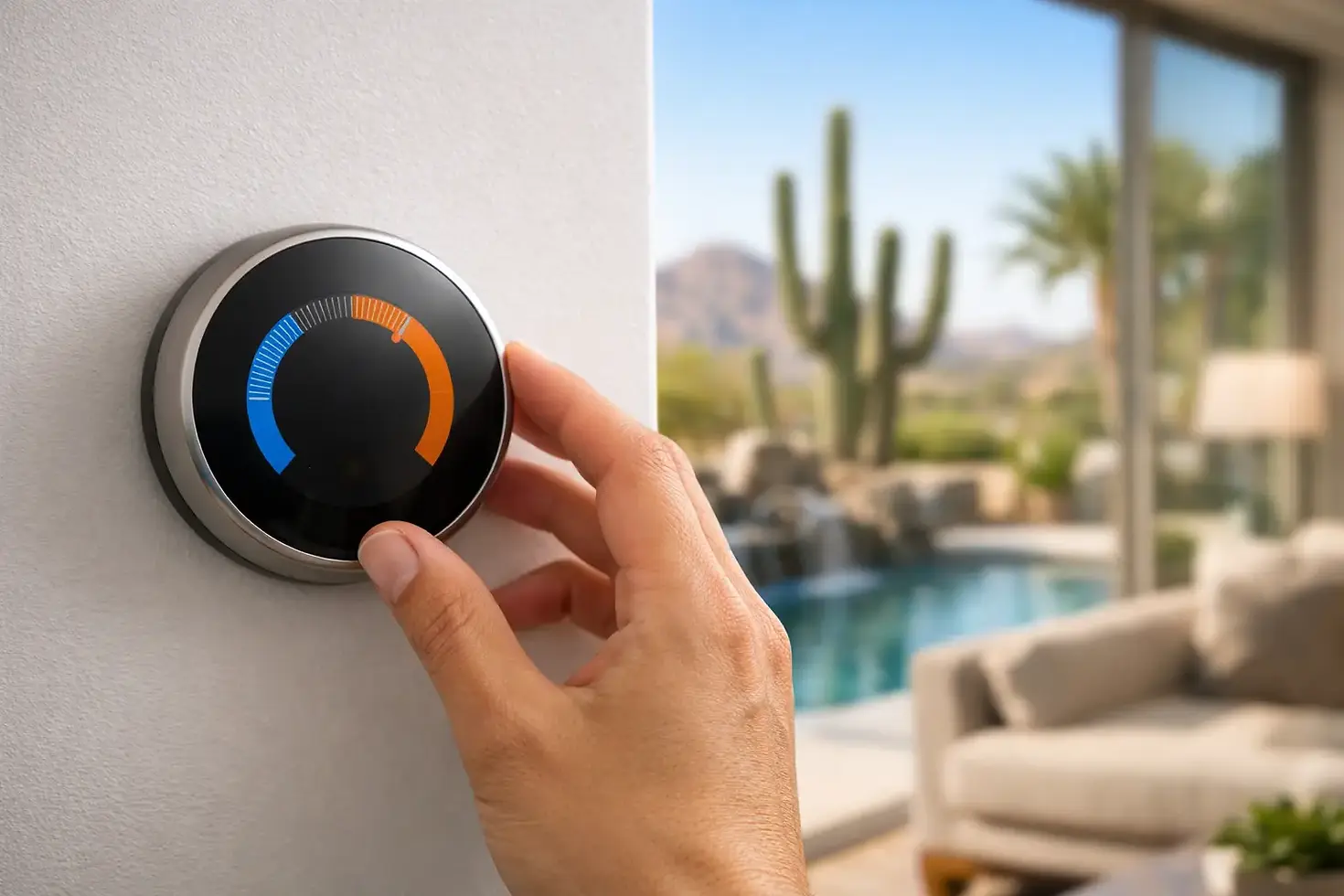
Best Thermostat Settings for Arizona Summer
When the Verde Valley is pushing past 100 degrees, the best thermostat settings Arizona summer homeowners can use are usually less about finding one magic number and more about building a steady cooling routine. A thermostat set too low can run your air conditioner for long stretches without making every room feel better. Set too high, and a hot house can become difficult and expensive to bring back under control.
For most homes, start with 78 degrees when people are home and awake. That is a practical balance between comfort and cooling demand for many Arizona households. From there, adjust based on your home's insulation, sun exposure, number of occupants, and how well your system is performing.
Best thermostat settings for Arizona summer comfort
A setting of 78 degrees is a solid starting point during occupied hours. If that feels warm, try 77 degrees before making a larger change. A one-degree adjustment can make a noticeable difference in how often the system runs, especially during the hottest part of the afternoon.
At night, many people sleep better at 74 to 76 degrees. Bedrooms can hold heat, particularly in homes with west-facing windows or second-story rooms. Closing blinds before the afternoon sun arrives, using ceiling fans, and keeping bedroom doors positioned for good airflow may let you sleep comfortably without setting the whole house much lower.
When everyone is away for several hours, 82 to 85 degrees is often reasonable for a typical home. If you have pets, older residents returning home during the day, heat-sensitive belongings, or a poorly insulated house, choose a lower away setting. The goal is not to let the house bake all day. It is to reduce unnecessary cooling while keeping indoor conditions manageable.
For a vacation property or an empty building, a setting around 85 degrees may work, but do not shut the system off completely during extended Arizona heat. Indoor temperatures can climb quickly, putting extra strain on furnishings, electronics, and the air conditioner when it is eventually restarted. A consistent higher setting is generally easier on the home than allowing extreme indoor heat.
Avoid big temperature swings
It is tempting to set the thermostat at 68 degrees when the house feels hot. Unfortunately, that will not cool the home faster. Most central air-conditioning systems cool at roughly the same rate whether the thermostat is set to 76 or 68. The lower setting simply tells the equipment to keep running longer.
Large setbacks can also create a difficult recovery period. If the thermostat is raised sharply all day and then lowered several degrees at 5 p.m., the system has to work hardest when outdoor temperatures are still high and the home has stored hours of heat in its walls, roof, and furnishings.
A better approach is to make modest changes. Raise the thermostat two to four degrees while away, then schedule it to return to your comfort setting shortly before people come home. The right lead time depends on the size of the house, insulation, window exposure, and system capacity. A well-maintained system in a shaded home may recover quickly, while an older system in a sun-exposed home may need more time.
Use your programmable thermostat wisely
A programmable or smart thermostat can make summer cooling more consistent, but the schedule needs to match real life. Start with an occupied setting, an away setting, and a sleep setting. Give it a week, then adjust one degree at a time based on comfort and runtime.
For a household that leaves around 8 a.m. and returns at 5:30 p.m., an example schedule could be 78 degrees in the morning, 82 degrees while the house is empty, and 78 degrees beginning an hour before arrival. Set the temperature to 75 degrees for sleeping if that is comfortable for your family.
Smart thermostats can be helpful, but they are not a substitute for a properly sized, properly operating HVAC system. Some learning features make changes that do not fit every Arizona home. If the schedule keeps raising or lowering temperatures at inconvenient times, use a simple manual schedule instead.
Set the fan to Auto, not On
The thermostat fan setting matters. In most homes, use the Auto setting. This runs the blower only when the cooling system is actively operating.
With the fan set to On, the blower continues moving air between cooling cycles. That can help even out temperatures in some homes, but it can also use more electricity and may move warmer air through the ducts after a cooling cycle ends. During monsoon season, continuous fan operation may also make indoor humidity feel more noticeable because moisture on the indoor coil can be returned to the home before it drains.
If certain rooms are consistently warmer, do not assume the fan setting is the answer. The issue may involve duct leakage, a blocked return, weak airflow, attic heat, poor insulation, or an improperly balanced system. A service check can identify the cause instead of forcing the equipment to run longer.
Account for Arizona sun and your home's layout
The thermostat only reads the temperature where it is installed. If it sits in a hallway while a west-facing living room gets afternoon sun, the thermostat may say 78 while that room feels much warmer. This is common in Camp Verde, Cottonwood, Sedona, and other areas where strong sun can heat one side of a home quickly.
Keep supply vents open and clear of furniture, rugs, and curtains. Closing many vents to force air into another room can raise system pressure and reduce overall performance. Use window coverings before direct sun hits, and make sure exterior doors close tightly. These simple steps reduce the heat entering the home, which makes your preferred thermostat setting more realistic.
Ceiling fans are useful when someone is in the room because moving air makes skin feel cooler. They do not lower the room temperature, so turn them off when the room is empty. That small habit prevents unnecessary electricity use without changing comfort.
When 78 degrees still does not feel comfortable
A thermostat setting is only part of the equation. If your home struggles to hold 78 degrees, runs continuously through the afternoon, produces weak airflow, or has rooms that are much hotter than others, there may be a maintenance or equipment issue.
Start with the basics. A clogged filter restricts airflow, while a dirty outdoor coil can prevent the unit from releasing heat efficiently. A clogged condensate drain, low refrigerant charge, failing capacitor, duct leak, or aging blower motor can also affect cooling performance. These are not issues to solve by repeatedly lowering the thermostat.
In very hot weather, an air conditioner may run for long periods. What matters is whether it is steadily cooling, maintaining a reasonable indoor temperature, and cycling normally when outdoor temperatures ease. If the system cannot keep up, blows warm air, freezes up, trips breakers, or makes unusual noises, arrange professional service before a minor problem becomes a breakdown.
Thermostat settings for businesses and rental properties
Small offices, shops, and rental properties need settings that account for occupancy, equipment, and tenant comfort. A business with customers coming and going may need a cooler daytime setting than a vacant office. Kitchens, server equipment, south-facing storefronts, and frequently opened doors can all add cooling load.
For an occupied small business, 76 to 78 degrees is often a practical range. During closed hours, raise the setting moderately rather than turning the system off entirely. Property owners should also consider who controls the thermostat and whether a locked cover or programmed schedule can prevent extreme adjustments that strain the system.
A comfortable setting should not require constant adjustment
The best thermostat setting is one your home can maintain without long, stressful recovery cycles or daily thermostat battles. Begin around 78 degrees, make small changes for sleep and away periods, and pay attention to airflow and room-to-room comfort.
If your system cannot deliver steady comfort at a reasonable setting, TNT Heating and Cooling can help identify whether the answer is maintenance, ductwork, repair, or a replacement plan that fits your home and budget.


Comments